
Then was Jesus led up of the Spirit into the wilderness to be tempted of the devil. Matthew 4:1 (KJV).
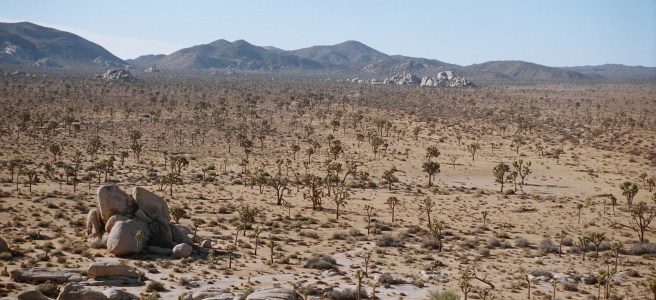
Read more: Understanding The Wilderness: A Place of Purpose, Not Punishment – Part 1The Bible often refers to the wilderness as a “desert land”—a wasteland, barren and uninhabited. The very word wilderness tends to stir images of isolation, emptiness, and uncertainty. One writer even describes it as “an empty or pathless region.” From a human perspective, it’s not a place we would choose. It feels uncomfortable, dry, and even overwhelming.
The Greek word for wilderness, ἔρημος (erēmos), means solitary, desolate, uninhabited, or deserted—not necessarily a sandy desert, but any place marked by loneliness and lack. And yet, when we begin to see the wilderness through the lens of Scripture, something changes.
What appears empty can become meaningful. What feels barren can become fruitful. When viewed through God’s Word, the wilderness is no longer just a place of loss—it becomes a place of growth, clarity, and transformation. Indeed, the wilderness is not easy. No one who has experienced it would call it pleasant. It can feel uncertain and dry. But even in that reality, there is a greater truth we must hold onto.
God gives us this promise: “I will open rivers in high places, and fountains in the midst of the valleys: I will make the wilderness a pool of water, and the dry land springs of water.” Read Isaiah 41:18. What a powerful assurance—God does not abandon us in the wilderness. He transforms it.
The promises of God are certain. Hence, We can trust this completely because God is faithful to His Word: “God is not a man, that He should lie… hath He said, and shall He not do it?” Read Numbers 23:19. Beloved, if God has spoken it, He will bring it to pass – “Ah Lord GOD!… nothing is too hard for thee.” Read Jeremiah 32:17.
A good question to pose here – Is the wilderness a sign of failure? A clear response from the Scripture is no. Too often, people assume that being in a wilderness season means they’ve done something wrong—that it must be the result of sin or failure. But the Scripture shows us something different, “For thou, O God, hast proved us: thou hast tried us, as silver is tried. Thou broughtest us into the net; thou laidst affliction upon our loins. Thou hast caused men to ride over our heads; we went through fire and through water: but thou broughtest us out into a wealthy place.” Read Psalm 66:10-12. The wilderness is not always a place of punishment, sometimes, it is a place of purpose.
Take a look at Christ – Scripture testifies clearly about Him: “For He hath made Him to be sin for us, who knew no sin; that we might be made the righteousness of God in Him.” Read 2 Corinthians 5:21. He was completely sinless. As it is written, “Who did no sin, neither was guile found in His mouth” Read 1 Peter 2:22. And again, “For we have not an high priest which cannot be touched with the feeling of our infirmities; but was in all points tempted like as we are, yet without sin.” Read Hebrews 4:15. If the sinless Son of God walked through wilderness experiences, then our own wilderness seasons cannot automatically mean we are in the wrong.
If even Christ—who was without sin—faced testing and hardship, then the presence of a wilderness season in our lives cannot automatically be equated with wrongdoing. Have you read the Book of Job lately? The Bible says, “There was a man in the land of Uz, whose name was Job; and that man was perfect and upright, and one that feared God, and eschewed evil.” Read Job 1:1. The wilderness is a divine space where faith is refined, defined, is deepened, and His power is revealed in ways we could not experience otherwise. Beloved, Job experienced that power, pause and calmly think.
As I reflect on understanding the wilderness; it is not the end of the story. The wilderness, then, in God’s hands, becomes a place of “refuge and strength.” Read Psalm 46:1, where dryness gives way to “rivers of living waters” Read John 7:38, and emptiness is filled with His presence, “And Jesus said unto them, I am the bread of life: he that cometh to me shall never hunger; and he that believeth on me shall never thirst.” Read John 6:35.
Dear Lord, You are Sovereign. You have supreme authority and power over all Your creation. You speak, and it comes to pass. Help us to trust You in every wilderness season. Remind us that even in dryness, You are working. Even in emptiness, You are present. And even in waiting, You are faithful. The Bible says, A Psalm of David. “The earth is the LORD’S, and the fulness thereof; the world, and they that dwell therein.” Read Psalm 24:1.
We write. You read. Be encouraged.
Understanding The Wilderness: A Place of Purpose, Not Punishment – Part 1

 Kolumns